I Thought Repotting Would Fix It. I Was Looking in the Wrong Place.
I thought repotting would solve the problem. But it didn’t.
In fact, the plant looked worse.
A few weeks ago, I brought home a Thai Constellation Monstera.
Like many collectors, I was excited. The leaves were beautifully variegated, the plant looked healthy, and I immediately started imagining how it would grow over the next few years.
For the first few days, everything seemed fine. Then, I noticed the yellowing.
At first, it was subtle. A small patch of discoloration on one of the leaves. Then soft brown spots began appearing.
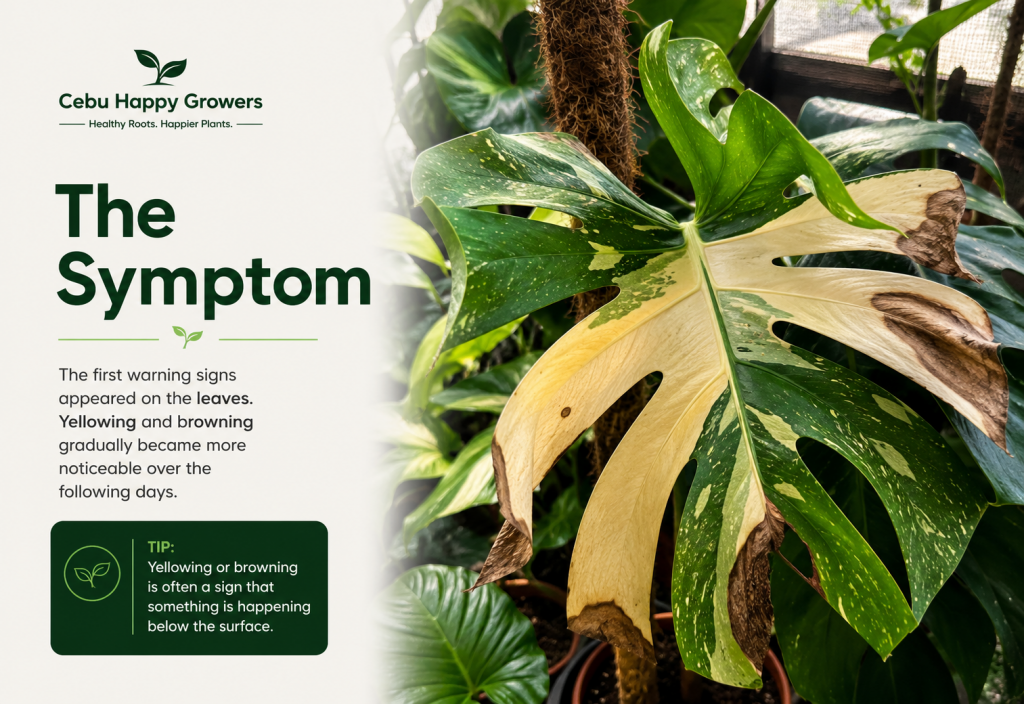
Over the next several days, the symptoms became harder to ignore.
If you’ve ever brought home a plant you genuinely cared about, you probably know the feeling.
You start checking it every morning. You inspect every leaf. You replay every decision you’ve made.
Did I water too much?
Did I water too little?
Is it adjusting?
Is it declining?
Should I intervene or leave it alone?
Like many collectors, I assumed the problem was transplant stress. The plant had recently changed environments and was likely adjusting to a new growing space.
After about a week, I decided to repot it. To minimize root disturbance, I left the root ball intact and transferred it into a larger container with fresh growing media surrounding the original substrate.
In theory, it was the safer approach.
Protect the roots.
Reduce stress.
Give the plant a better environment.
Then wait.
But the yellowing continued. The brown spots became more noticeable. And that’s when I started questioning my assumptions.
Had I repotted too soon?
Was the plant already struggling before I bought it?
Was it simply adjusting more slowly than expected?
Or was I missing something entirely?
Looking Beyond the Leaves
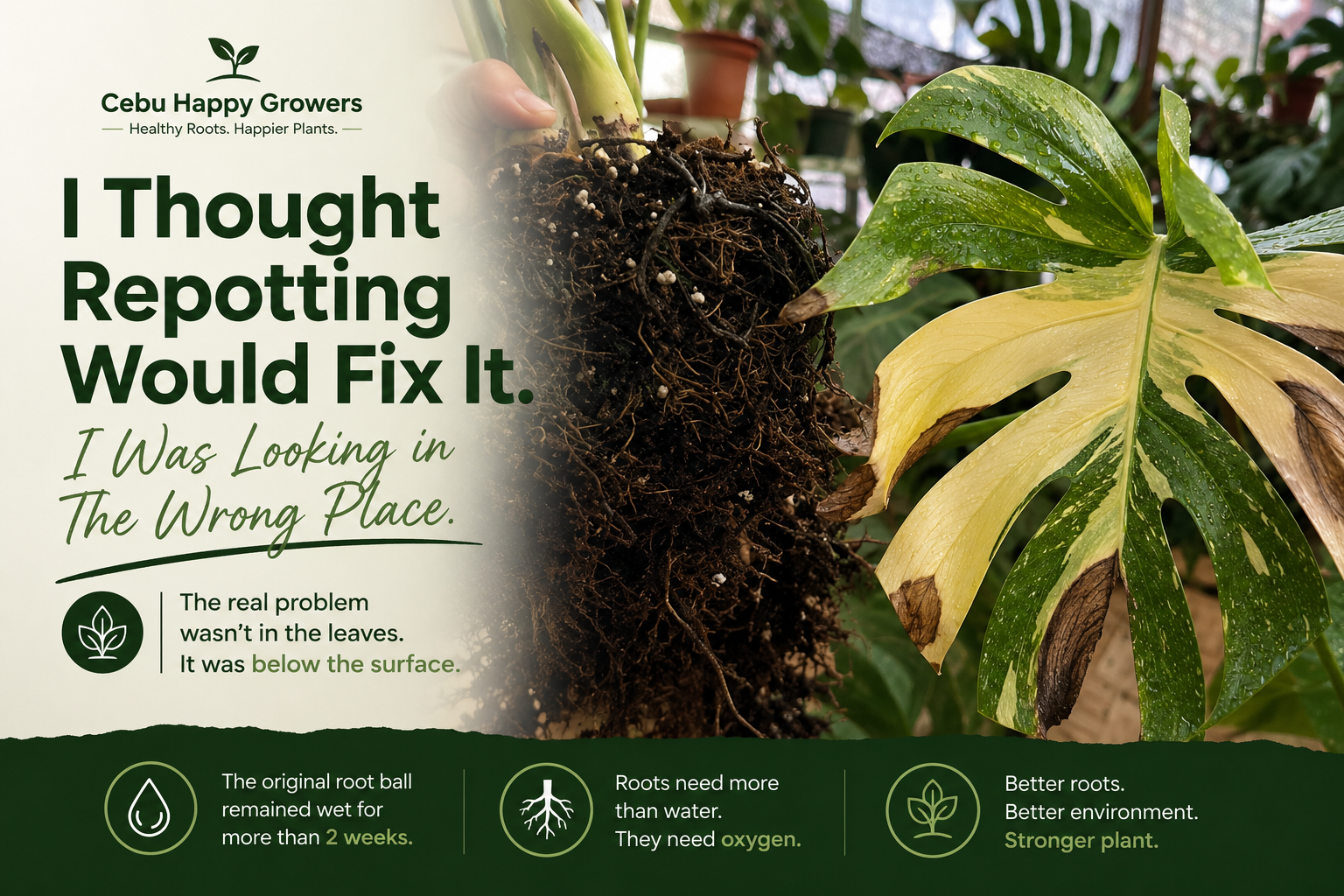
A few days later, I noticed something important. The original substrate surrounding the root ball was still wet.
Not damp. Wet.
More than two weeks after bringing the plant home, it had barely dried.
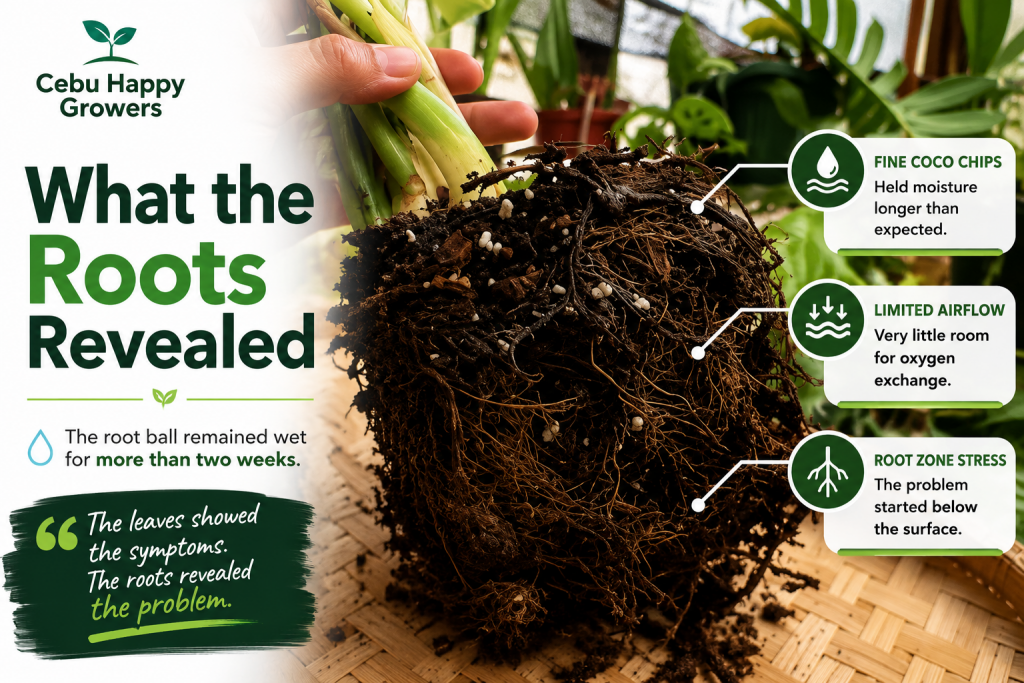
I wasn’t expecting that.
By then, I assumed the media would have started drying between waterings. Instead, the root ball felt almost unchanged from the day I brought the plant home.
That’s when I started questioning whether transplant stress was really the issue. Until that moment, I had been focused on the symptoms.
The yellow leaves.
The brown spots.
The visible signs of decline.
But what if those weren’t the problem? What if they were simply revealing a problem that had been happening underground all along?
The Mistake Many Gardeners Make
When plants struggle, most of us focus on what we can see.
Yellow leaves.
Brown edges.
Drooping stems.
Slow growth.
The visible symptoms naturally draw our attention. But leaves don’t create problems. They reveal them.
In many cases, the foliage is simply reporting what the roots are experiencing. And that realization led me to a much more important question:
What kind of environment were the roots living in?
Why Roots Need More Than Water
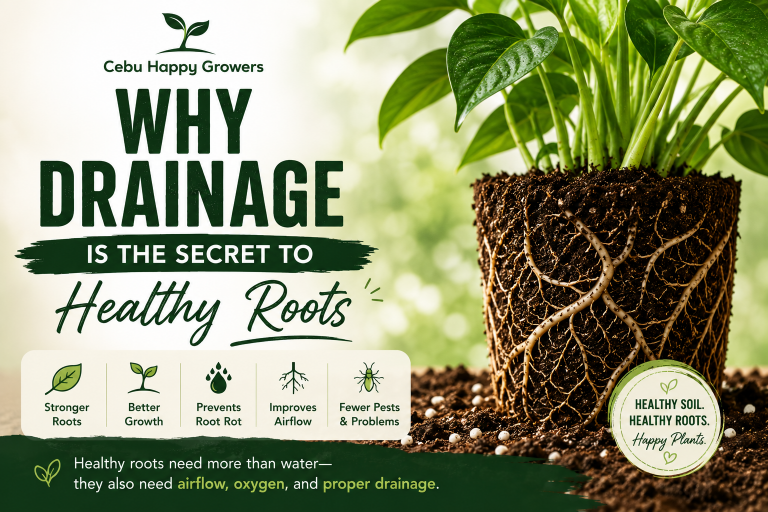
Most gardeners understand that roots need moisture.
Fewer realize they also need oxygen.
Healthy roots exist in a balance between the two.
When growing media remains saturated for extended periods, airflow around the root zone becomes limited. Over time, this can create conditions that stress roots and reduce their ability to function efficiently.
The symptoms often appear above the surface:
- Yellowing leaves
- Soft brown spots
- Reduced vigor
- Slower growth
- Increased susceptibility to root problems
Ironically, many of these symptoms are often mistaken for nutrient deficiencies or watering issues when the real problem is the root environment itself.
The Second Repotting
After observing the plant further, I made a second decision.
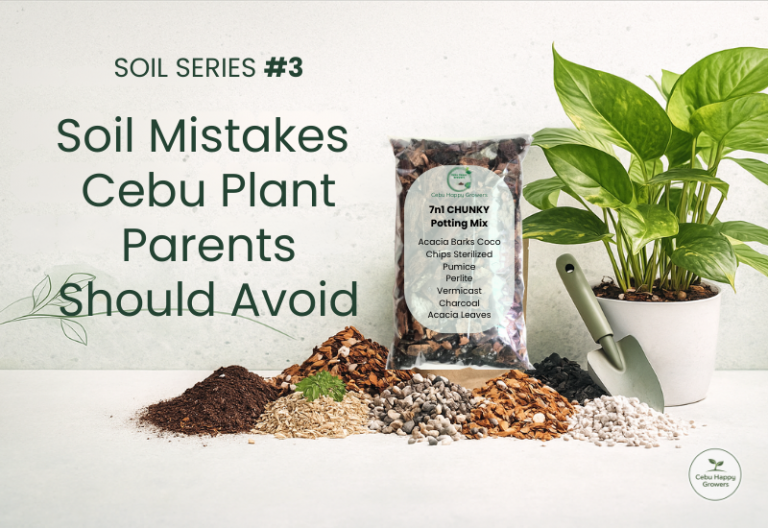
I removed the remaining original substrate from around the root ball and transitioned the plant into a chunkier, better-aerated growing media. In my case, I used our CHG Collector Premium Aroid Mix because it provides more airflow and drainage around the roots.
This time, my goal wasn’t simply to repot the plant. My goal was to improve the environment surrounding the roots.
The focus shifted from the leaves to the foundation supporting them.
Better airflow.
Better drainage.
Better oxygen availability.
A healthier root zone.
What Happened Next?
The damaged leaves didn’t suddenly become healthy again. The yellowing didn’t disappear overnight. The brown spots remained on the affected tissue.
And that’s an important lesson many growers overlook.
Recovery rarely looks dramatic. Damaged leaves often stay damaged.
Instead of asking:
“Do the leaves look perfect again?” I started asking: “Is the plant continuing to decline?”
The answer gradually became clearer.
The progression of symptoms slowed. The plant appeared more stable. The overall condition improved.
Most importantly, it no longer felt like the plant was moving in the wrong direction.
What This Plant Taught Me
As growers, it’s easy to become distracted by symptoms.
A yellow leaf feels urgent.
A brown spot feels alarming.
A drooping stem feels like a problem that demands an immediate solution.
But symptoms are often the final chapter of a story that began much earlier. Usually below the surface.
Plant health is rarely determined by the leaves alone. It is determined by the environment surrounding the roots.
The drainage.
The airflow.
The growing media.
The balance between moisture and oxygen.
These are the foundations upon which healthy growth is built.
The CHG Perspective
When I first noticed the yellowing and browning, I thought repotting was the solution. I thought a new pot and fresh growing media would immediately solve the problem.
But this experience taught me something more important.
Sometimes the answer isn’t in the leaves.
Sometimes it isn’t in the fertilizer.
Sometimes it isn’t in another treatment or another product.
Sometimes the most important clues are hidden where we rarely look.
Below the surface.
At Cebu Happy Growers, we believe healthy plants begin with healthy roots. Because the root environment influences everything that follows.
Strong roots support healthy leaves. Healthy leaves support steady growth. And steady growth creates thriving plants.
The next time a plant begins showing signs of decline, resist the urge to chase the symptom.
Look deeper. Ask what the roots are experiencing. Ask whether the environment is helping them thrive.
Because every thriving plant starts with something most people never see. A healthy root system.
And when the foundation is right, growth becomes more than possible. It becomes inevitable.